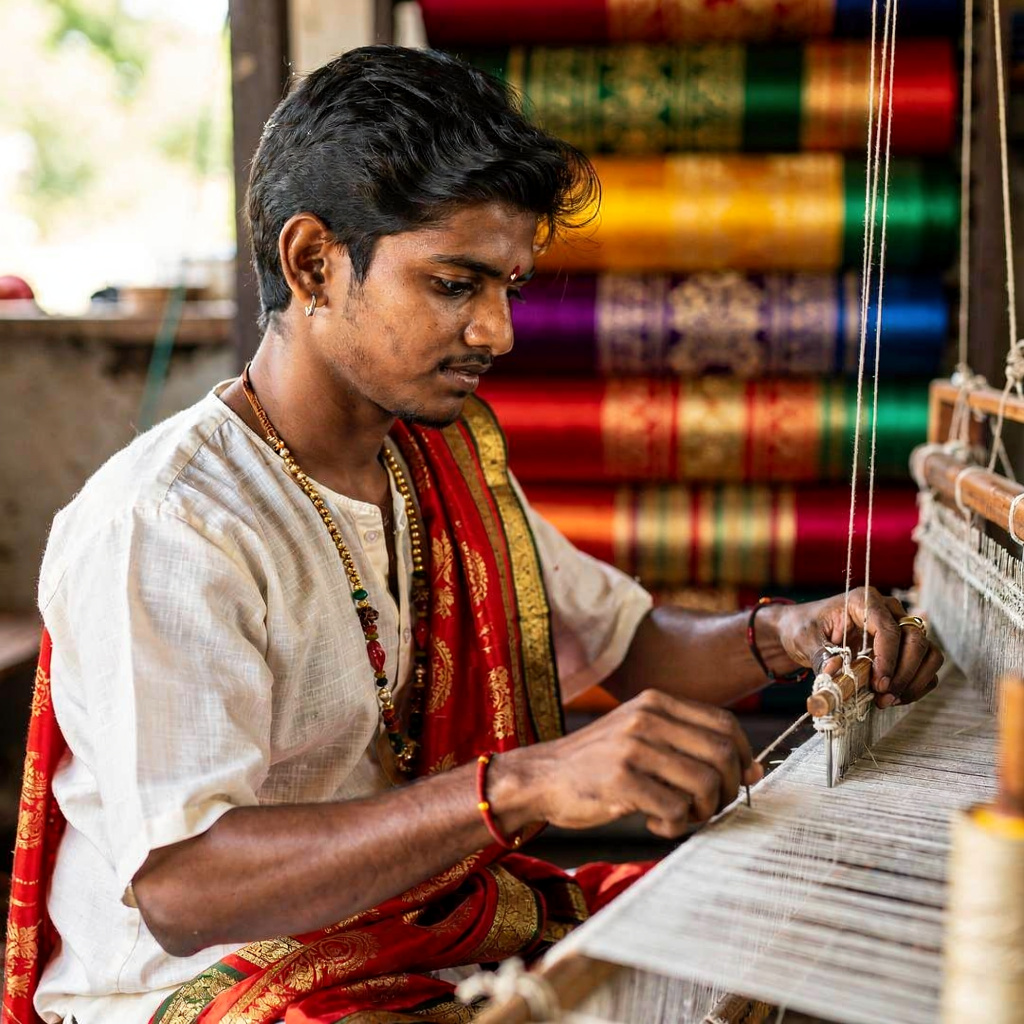
Virtual Village Tour
The Silk Villages of Karnataka
Journey into the heartland of Mysore Silk — the living villages where every thread is born.
Weaving Clusters
Four distinct weaving communities, each with a unique tradition
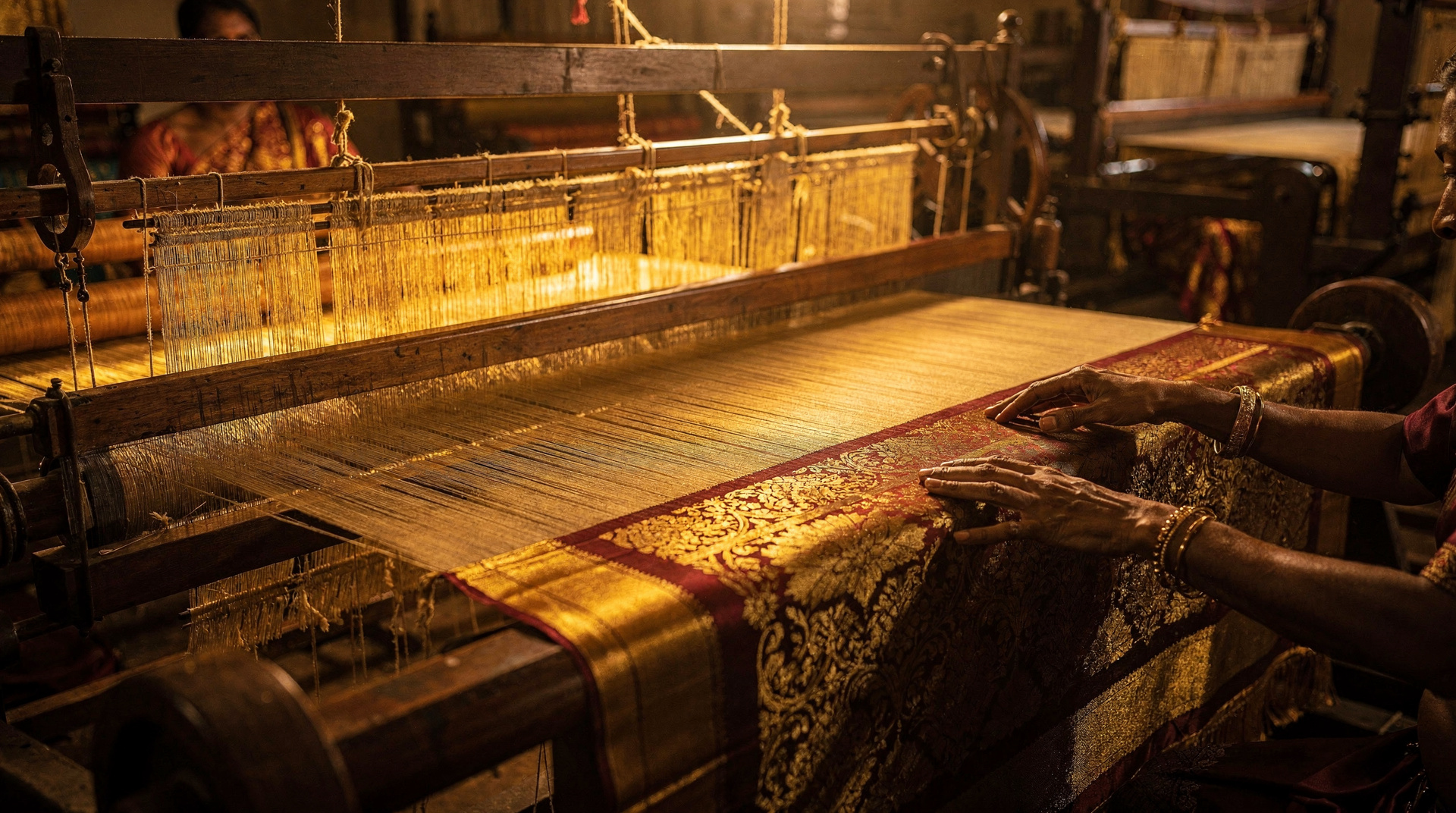
Inside a Loom Workshop

Thread Preparation

Finished Silk Display
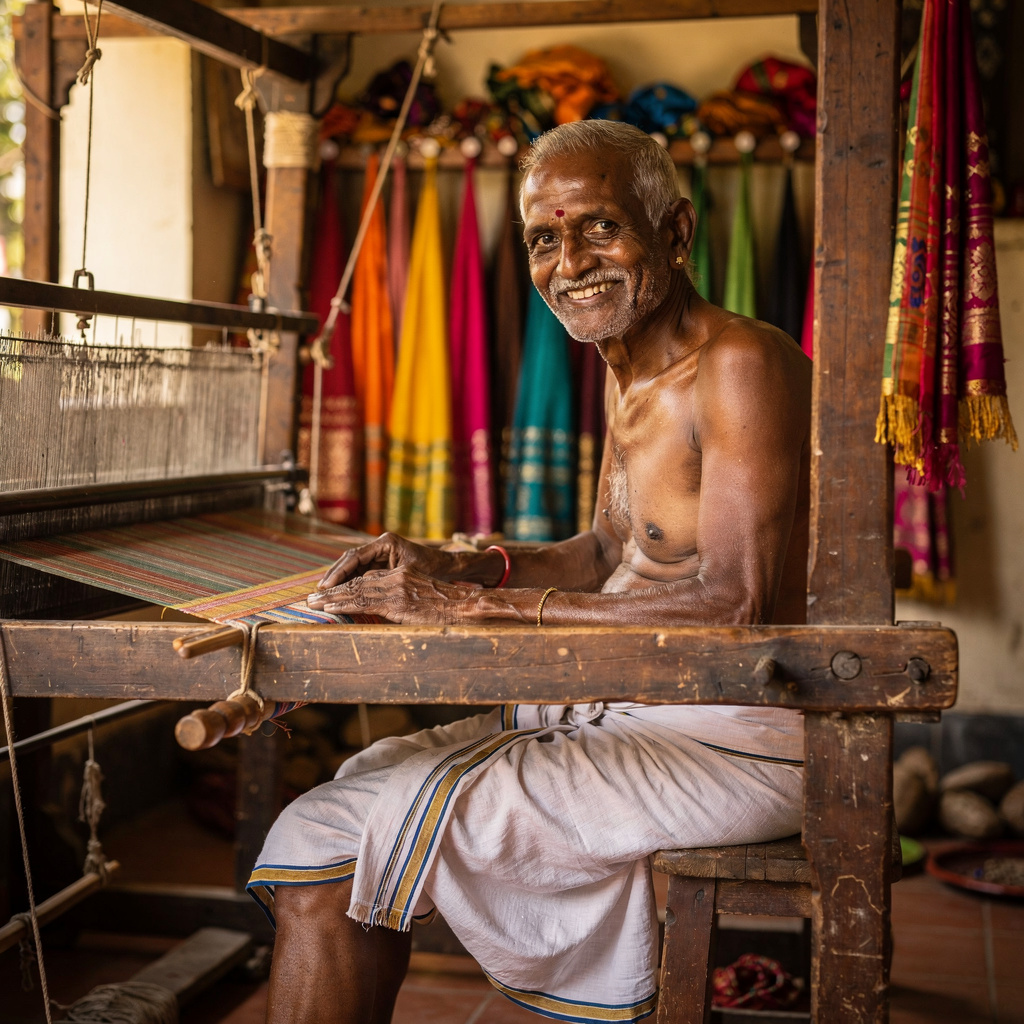
Master Ramu at Work
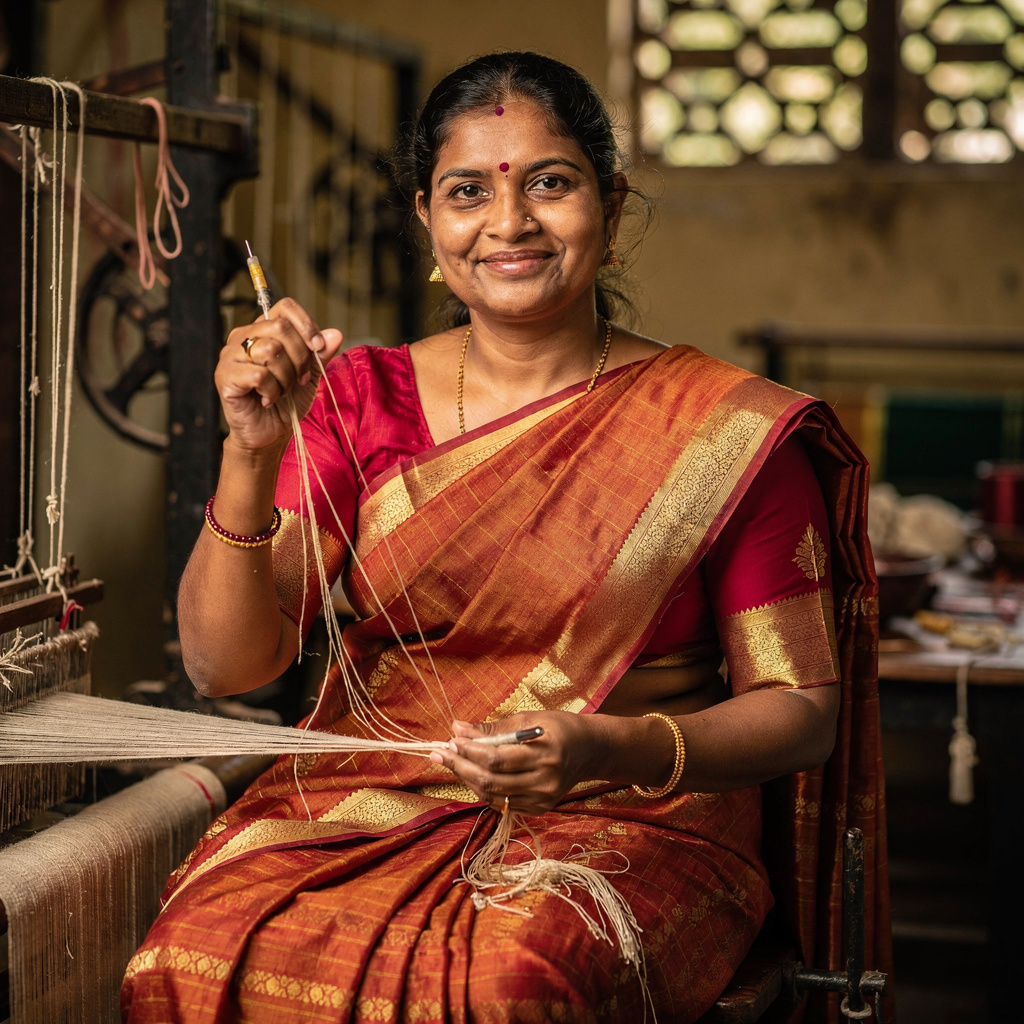
Savitha's Women Collective

Silk Saree Collection
A Day in the Village
Life moves to the rhythm of the loom
The artisan wakes before sunrise and offers silk threads at the home shrine, a daily ritual of gratitude.
Breakfast of ragi mudde and sambar, then the walk to the loom room in the same home where 3 generations have woven.
The loom begins its rhythm. Shuttle throws back and forth. Each pass is a heartbeat. 200–400 passes per hour.
A midday break for rice and rasam. The village comes alive with the sounds of 50 looms in a single street.
Back to the loom. The afternoon brings the hardest patterns — zari work requires full concentration.
Loom stopped. The day’s weaving measured — perhaps 20–25cm. A small inch of beauty, earned with patience.
Cultural Heritage
Royal Origins
Mysore Silk was originally woven exclusively for the Wodeyar royal family. Tipu Sultan established sericulture farms to ensure a royal silk supply.
GI Protection
Since 2005, Mysore Silk holds a Geographical Indication tag — protecting its authenticity and preventing imitation from other regions.
Ramanagara Silk
Known as the “Silk City of Asia,” Ramanagara produces 40% of India’s raw silk. Its mulberry farms supply the finest grade silk for Mysore weaving.
Royal Gifting Tradition
Mysore Silk sarees are a traditional gift for brides, daughters, and visiting dignitaries — a practice dating back to the Mysore Palace ceremonies.
Meet the Weavers
Connect personally with the artisans behind these villages